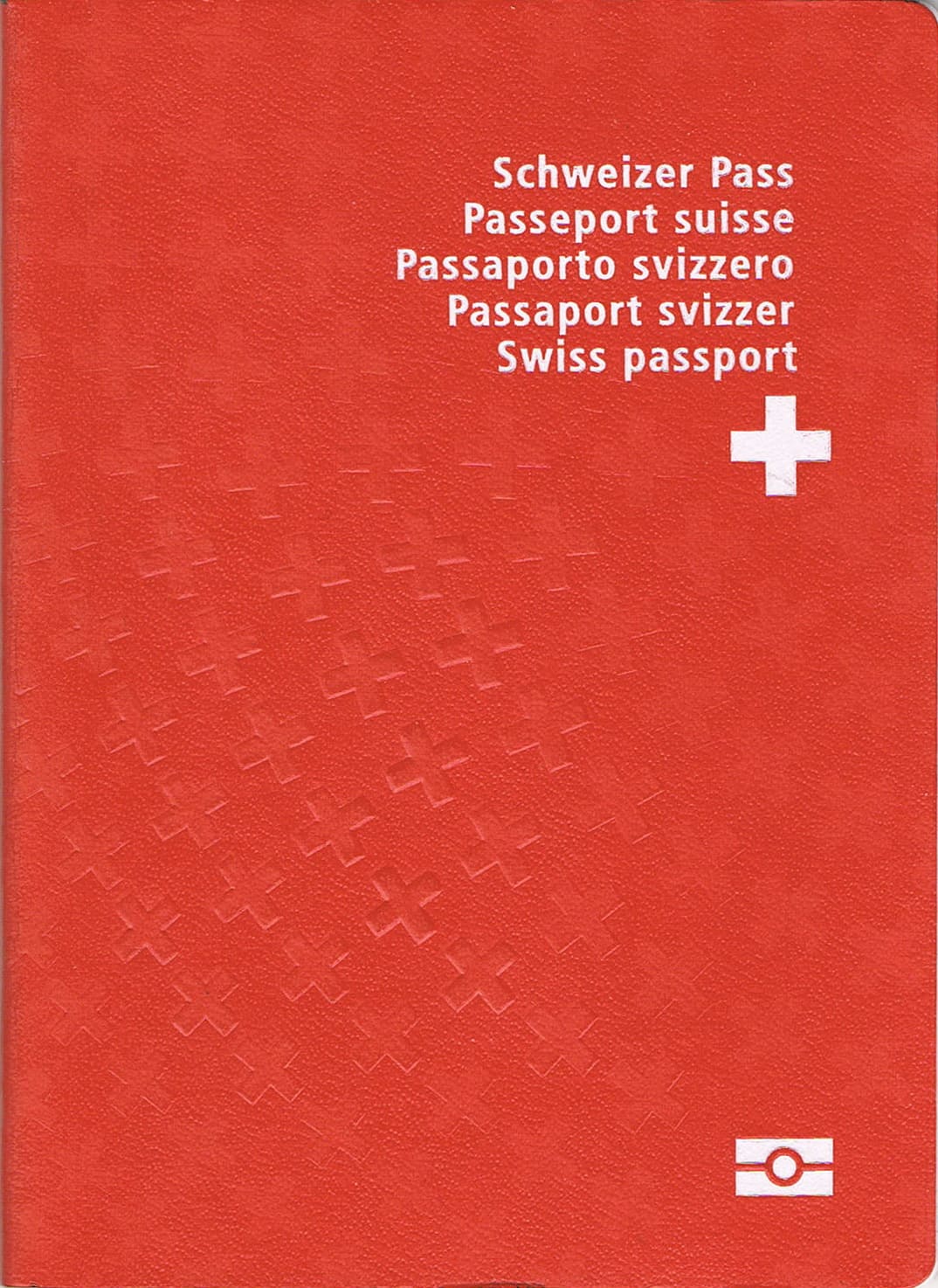
Switzerland does not have an "investor visa" or a dedicated "entrepreneur residence permit" in the way some other countries do. However, Swiss immigration law provides clear pathways for business owners and self-employed individuals to obtain a B residence permit (Aufenthaltsbewilligung) — provided they meet specific requirements related to economic contribution, financial means, and personal qualifications.
The legal framework is set by the Federal Act on Foreign Nationals and Integration (AIG) and the Ordinance on Admission, Residence and Employment (VZAE). For EU/EFTA nationals, the Agreement on the Free Movement of Persons (FZA) provides a significantly easier path.
This guide covers both routes — for EU/EFTA and non-EU nationals — and explains how company ownership connects to the immigration process, what the cantonal authorities look for, and how to build the strongest possible application.
SWISS RESIDENCE PERMITS — KEY FACTS
THE B PERMIT EXPLAINED
The B permit is Switzerland's standard residence permit for foreign nationals who intend to live and work in the country for more than 90 days. It is issued by the cantonal migration authority (Migrationsamt) where you intend to reside.
For business owners and self-employed persons, the B permit can be issued on the basis of:
- Self-employment (Selbständige Erwerbstätigkeit): You run your own business as a sole proprietor or as a managing partner of a company you own.
- Employment by your own company: You are formally employed (as a director or employee) by a Swiss company you own. This is common with AG and GmbH structures where the owner serves as managing director.
The distinction matters because the requirements and documentation differ depending on whether you apply as self-employed or as an employed person. For company owners who serve as directors, the "employment by own company" route is often more straightforward, as it more clearly demonstrates a regular income and social insurance contributions.
EU/EFTA NATIONALS
Citizens of EU and EFTA member states benefit from the Agreement on the Free Movement of Persons (FZA/AFMP), which provides a streamlined path to Swiss residence. The agreement covers all 27 EU member states plus Iceland, Liechtenstein, and Norway (EFTA).
Requirements for EU/EFTA self-employed persons:
- Proof of self-employment or company ownership in Switzerland (Commercial Register excerpt, articles of association)
- Evidence that the business generates or will generate sufficient income to support yourself and your family
- Valid identity document (passport or national ID card)
- Registration with the commune of residence within 14 days of arrival
- Health insurance coverage (mandatory in Switzerland within 3 months of arrival)
The B permit for EU/EFTA nationals is typically valid for 5 years and is renewed automatically as long as the self-employment or employment continues. The process usually takes 4-8 weeks from application to permit issuance.
Key advantage: EU/EFTA nationals do not need to demonstrate "economic interest" to Switzerland. The FZA guarantees the right to take up self-employment, provided the activity is genuine and not merely a pretext to access social welfare. This makes the process significantly more predictable than for non-EU nationals.
NON-EU/EFTA NATIONALS (THIRD-COUNTRY NATIONALS)
For nationals of countries outside the EU/EFTA area, obtaining a Swiss residence permit through business is more complex. The legal basis is Art. 18-25 AIG and Art. 19-20 VZAE. The key hurdle is demonstrating that your presence in Switzerland serves a significant economic interest (erhebliches wirtschaftliches Interesse).
Requirements for non-EU self-employed persons:
- Detailed business plan: Demonstrating the viability, market opportunity, and economic contribution of your business in Switzerland
- Proof of financial means: Sufficient capital to fund the business and support yourself without relying on Swiss social welfare (typically CHF 100,000-200,000 minimum in practice)
- Job creation: The more Swiss jobs your business creates, the stronger your application. Authorities view positively any business that employs Swiss residents.
- Professional qualifications: Relevant education, professional experience, and track record demonstrating your ability to successfully run the business
- Quota availability: Non-EU permits are subject to annual federal and cantonal quotas. Applications must be submitted when quotas are available.
The application is submitted to the cantonal migration authority, which assesses the business case and forwards it to the State Secretariat for Migration (SEM) for federal approval. The B permit for non-EU nationals is initially valid for 1 year and must be renewed annually.
Processing time is typically 8-16 weeks, though complex cases or applications during peak periods may take longer. Having a Swiss company already established (such as through a shelf company) can strengthen the application by demonstrating concrete commitment.
CANTON APPLICATION PROCESS
Regardless of your nationality, the residence permit is issued by the canton where you intend to reside. Here is the typical application process:
APPLICATION PROCESS — 6 STEPS
ESTABLISH YOUR SWISS COMPANY
Form a new company or acquire a shelf company. Having a registered entity with a Commercial Register entry strengthens your application significantly. See our company formation services.
PREPARE APPLICATION DOCUMENTS
Compile your business plan, financial projections, proof of capital, CV, educational certificates, passport copies, criminal record extract, and company documentation (articles of association, Commercial Register excerpt, bank statements).
SUBMIT TO CANTONAL MIGRATION AUTHORITY
EU/EFTA nationals register at the commune of residence and apply at the cantonal migration office. Non-EU nationals submit through the Swiss embassy/consulate in their home country or directly to the cantonal authority if already in Switzerland on a valid visa.
CANTONAL & FEDERAL REVIEW
The cantonal migration authority reviews the application. For non-EU nationals, they also consult the cantonal economic development office and forward the application to SEM for federal approval. EU/EFTA applications are handled at cantonal level only.
PERMIT ISSUANCE
Upon approval, the cantonal migration authority issues the B permit. You receive a biometric residence card (Ausweiskarte). For non-EU nationals, a visa authorization (Visumsermaechtigung) is sent to the Swiss embassy for entry into Switzerland.
REGISTRATION & SOCIAL INSURANCE
Register with the commune of residence, obtain mandatory health insurance within 3 months, register for AHV/IV social insurance, and set up your tax status with the cantonal tax administration.
FINANCIAL REQUIREMENTS
Swiss law does not specify a fixed minimum investment amount for business-related residence permits. However, cantonal migration authorities apply a practical standard: you must demonstrate sufficient financial means to sustain yourself, your family, and your business without relying on social assistance (Sozialhilfe).
In practice, migration authorities typically look for:
- Business capital: Adequate capitalization for the company (minimum CHF 20,000 for GmbH, CHF 100,000 for AG, plus working capital)
- Personal savings: Sufficient personal funds to cover living costs for the initial period (typically 12-24 months of expenses, around CHF 3,000-5,000/month for a single person in Zurich)
- Income projections: Realistic financial projections showing the business can generate sustainable income within a reasonable timeframe
- Health insurance: Budget for mandatory Swiss health insurance (approximately CHF 350-500/month per adult)
Total practical minimum: For a non-EU applicant establishing an AG in Zurich, expect to demonstrate access to at least CHF 200,000-300,000 in combined business capital and personal reserves. EU/EFTA nationals face lower implicit thresholds because their right to self-employment is protected by the FZA.
FAMILY REUNIFICATION
B permit holders have the right to family reunification (Familiennachzug) under Art. 42-52 AIG. Your spouse and children under 18 can join you in Switzerland and receive their own residence permits.
Requirements for family reunification:
- Adequate housing for the family (no minimum size defined, but must meet local standards)
- Sufficient financial means to support the family without social assistance
- Family members must apply within 5 years (for spouse) or before children turn 18
- All family members must obtain Swiss health insurance
EU/EFTA family members (regardless of the family member's nationality) receive their permits more easily under the FZA. Non-EU family members joining a non-EU B permit holder face additional scrutiny and are subject to quota restrictions.
PATH TO PERMANENT RESIDENCE (C PERMIT)
The C permit (Niederlassungsbewilligung) is Switzerland's permanent residence permit. It provides unconditional residency with no restrictions on employment or self-employment. C permit holders can change jobs, start new businesses, and move between cantons freely.
Timeline to C permit:
- EU/EFTA nationals: Eligible after 5 years of continuous residence with a B permit. Citizens of certain countries (e.g., USA, Canada, UK) also qualify after 5 years under bilateral agreements.
- Other non-EU nationals: Eligible after 10 years of continuous residence. Good integration (language skills, social participation, no criminal record) is required.
- Early C permit: Some cantons offer early C permits after 5 years for well-integrated non-EU nationals who demonstrate strong ties to Switzerland.
Maintaining your B permit in good standing — no criminal record, no reliance on social welfare, continuous employment or business activity, and payment of taxes — is essential for a successful C permit application.
TAX IMPLICATIONS OF SWISS RESIDENCY
Becoming a Swiss tax resident has significant implications. Switzerland taxes residents on their worldwide income (with the exception of foreign real estate and foreign permanent establishments, which are exempt but affect the tax rate).
Key tax considerations for new residents:
- Withholding tax (Quellensteuer): B permit holders who are employed are subject to withholding tax at source. Self-employed persons and those earning above CHF 120,000 file ordinary tax returns.
- Double taxation agreements: Switzerland has DTAs with over 100 countries, preventing you from being taxed twice on the same income. Check your home country's DTA status with the State Secretariat for International Finance.
- Wealth tax: Switzerland imposes a wealth tax on worldwide net assets (rates vary by canton, typically 0.1-0.5% annually).
- Social insurance: Mandatory AHV/IV/EO contributions of approximately 10.6% of salary (split between employer and employee) plus unemployment insurance and other contributions.
Proper tax planning before relocating is essential. Our accounting and tax services team can advise on the optimal structure for your situation, including holding company arrangements and canton selection for tax efficiency.
HOW WE HELP
At Rohrer Consulting, we handle the full intersection of company formation and immigration — ensuring that your corporate structure and residence permit application are aligned from the start.
- Company formation or shelf company acquisition — establishing the legal entity that supports your permit application
- Business plan preparation — tailored to meet cantonal migration authority requirements
- Residence permit application management — from document preparation to cantonal liaison
- Tax planning and compliance — optimal structure from a corporate and personal tax perspective
PLAN YOUR MOVE TO SWITZERLAND
Book a free consultation to discuss your company formation and residence permit strategy. We respond within 24 hours.
Contact Our TeamFREQUENTLY ASKED QUESTIONS
Can I get a Swiss residence permit by starting a business?
Yes. Both EU/EFTA and non-EU nationals can obtain a Swiss residence permit through business ownership or self-employment. EU/EFTA nationals benefit from the FZA and face fewer restrictions. Non-EU nationals must demonstrate significant economic interest to Switzerland.
What is a B permit in Switzerland?
A B permit is a residence permit allowing you to live and work in Switzerland. For EU/EFTA nationals, it is valid for 5 years. For non-EU nationals, it is initially valid for 1 year and renewed annually. After 5-10 years, B permit holders may apply for a C permit (permanent residence).
What is the difference between a B and C permit?
A B permit is temporary and may have conditions. A C permit is permanent residence with no employment conditions. C permits are granted after 5-10 years of continuous residence depending on nationality.
Do EU citizens need a permit to work in Switzerland?
Yes. While the process is simplified under the FZA, EU/EFTA citizens still need to register and obtain a B permit if staying more than 90 days. Permits are generally granted upon proof of employment or self-employment.
How much money do I need to get a B permit through business?
There is no fixed minimum, but cantonal authorities typically require proof of sufficient capital. In practice, this means CHF 100,000-200,000+ in combined business capital and personal reserves, plus a viable business plan showing sustainable income generation.
How long does the B permit application take?
For EU/EFTA nationals: 4-8 weeks. For non-EU nationals: 8-16 weeks, as applications require both cantonal and federal (SEM) approval.
Can I bring my family to Switzerland on a B permit?
Yes. Your spouse and children under 18 can join you through family reunification. You must demonstrate adequate housing and financial means. Family members receive their own B permits.
Does owning a shelf company help with getting a residence permit?
A shelf company can form the basis for an application, but ownership alone is not sufficient. You must demonstrate active management, economic interest, and meet financial requirements. Having an established entity can accelerate the process. See our residence permit service.
Which canton is easiest for getting a business residence permit?
All cantons follow the same federal framework (AIG/VZAE). Cantons with active economic development programs like Zurich, Zug, and Geneva tend to have more structured processes. The strength of your business case matters more than the canton choice.
Can I apply for a B permit while living outside Switzerland?
Yes. Non-EU nationals typically apply through the Swiss embassy in their home country. EU/EFTA nationals can enter Switzerland and apply within 14 days of arrival. Having your company and business plan prepared beforehand is recommended.
What happens if my B permit application is rejected?
You can appeal within 30 days to the cantonal administrative court. Common reasons for rejection include an insufficient business plan or inadequate financial means. Strengthening the business case and reapplying with professional assistance often leads to approval.
Do I pay Swiss taxes if I have a B permit?
Yes. B permit holders are Swiss tax residents and taxed on worldwide income. Employed B permit holders are subject to withholding tax; self-employed persons file ordinary returns. Switzerland has double taxation agreements with over 100 countries.